Wednesday, January 5, 2022

Movie Review: “Spider-Man: No Way Home” Does Not Disappoint


“If you expect disappointment, then you can never really be disappointed.” — MJ Jones-Watson in “Spider-Man: No Way Home” 

It took me a while to get to the theater to see our favorite neighborhood web slinger’s latest outing in “Spider-Man: No Way Home.”

We had several things on our plate around the holidays. The movie we went to see on “Christmas Eve Eve” was “Ghostbusters: Afterlife” (read my review) — a movie we wanted to see before it left theaters. 

In the intervening weeks since “Spider-Man: No Way Home’s” release, friends on Facebook were wondering why Jon Brooks (of the famed Jon Crunch blog) hadn’t yet reviewed the newest entry in the Marvel Cinematic Universe. 

I did everything in my power to avoid spoilers (which is difficult for someone who lives online). But I’m pleased to say that I was successful in that goal. 

Last night I finally saw “Spider-Man: No Way Home”... and I’m ready to share my thoughts!

SPOILERS AHEAD

I typically DO NOT do spoiler reviews, but this movie has been out for nearly three weeks (as I write this post). Since the movie is basically one giant spoiler anyway, I decided to give spoilers a go. 

So here goes!

The last time we hung out with Peter Parker (Tom Holland) was in 2019’s “Spider-Man: Far From Home” (read my review). In a mid-credit scene, TheDailyBugle.net’s J. Jonah Jameson (J.K. Simmons) outed Parker as Spider-Man — he was also framed for the murder of villain Quentin Beck (Jake Gyllenhaal). 


The identity reveal serves as the main plot device that structures the setup of “Spider-Man: No Way Home.” 

With Peter and pals sending out college applications as they prepare for high school graduation, this revelation negatively impacts the M.I.T. aspirations of Peter, Ned (Jake Batalon), and girlfriend MJ (Zendaya). 

Since the gang wants to stay together in college (and Peter feels guilty for hurting their collegiate opportunities), Peter visits Doctor Stephen Strange (Benedict Cumberbatch) at the New York Sanctum to see if he can help. 


Strange believes a magic spell that causes everyone to forget Parker is Spider-Man would be the smoothest route to take. But the spell is corrupted when Parker — having second thoughts “mid spell” — starts asking for exceptions to those who forget. 

Strange does what he can to contain the spell amid Peter’s requests, but it isn’t enough. Things soon go haywire as a result of the spell. 

At this point, I felt a teeny bit aggravated as a fan. Both Strange and Parker faced dire consequences during the events of “Avengers: Infinity War” (read my review) and “Avengers: Endgame” (read my review). The two should understand the ramifications of messing around with things like magic. 


Surely both would avoid messing with the space-time continuum (or memory displacement, or whatever we call it in the MCU)... right?? 

I learned a long time ago to “willfully suspend my disbelief” with these movies, but you’d have thought a brainiac like Strange would have avoided such a move — especially since he found the “one” scenario (out of 14,000,605 scenarios) that led to the defeat of Thanos in “Endgame.”

But I digress...

Peter then tries the “old school” route of talking to an M.I.T. administrator (Paula Newsome) about reconsidering. 

As he is tracking her down on the freeway (she’s on her way to the airport), he is attacked by “Spider-Man 2’s” Dr. Otto Octavius (Alfred Molina). 


The trailers for “Spider-Man: No Way Home” revealed that Molina was going to be in this movie. At that point, fans knew this film was going to deal with the “multiverse” — we just weren’t sure how much. 

The 2019 animated film “Spider-Man: Into the Spider-Verse” (read my review) also dealt with the multiverse concept. In my review of that movie, I wrote: “It almost made me wonder what a live-action version of ‘Spider-Man: Into the Spider-Verse’ — with the same plot lines and characters — would be like. The more I’ve thought about the concept, the more I think it could work.“ 


While “Spider-Man: No Way Home” isn’t exactly a live-action remake of “Spider-Man: Into the Spider-Verse” (and, sadly, Miles Morales doesn’t make an appearance), many of the same principles apply. 

At first, I assumed the only “multiverse” participants we would see would be the aforementioned Octavius, “Spider-Man” (2002) villain Norman Osborn/Green Goblin (Willem Dafoe), “The Amazing Spider-Man” (2012) villain Curt Connors/Lizard (Rhys Ifans), “The Amazing Spider-Man 2” (2014) villain Max Dillon/Electro (Jamie Foxx), and “Spider-Man 3” (2007) villain Flint Marko/Sandman (Thomas Haden Church). 

Strange tasks Peter with rounding up the various villains. They are to be put in cages in the basement of the Sanctum. With the help of Ned and MJ, Peter eventually gets the task completed. 


Of the villains included, I really thought Foxx got an upgrade here. I enjoyed “The Amazing Spider-Man 2” when it was released in 2014, but thought the character wasn’t handled particularly well. Electro could have been so much more in that film. It was nice to see Foxx’s character redeemed, and the character handled in a better fashion in “No Way Home.” 


The most compelling of the lot was Norman Osborn. Dafoe is consistently good in the role (and as an actor overall). It seems like he’s been 55 years old for the last 30 years. It was nice to have the character back. 

Osborn is also at the center of the film’s third act. 


Peter’s Aunt May (Marisa Tomei) works for an organization called F.E.A.S.T. (Food, Emergency Aid, Shelter & Training) that cares for the poor. Osborn ends up at the F.E.A.S.T. building, and Peter follows shortly thereafter. 


May encourages Peter to give Osborn a second chance. And, as Strange is about to send the villains back to their respective dimensions, Peter thwarts the attempt, hoping to “cure” the villains before their return. 

This is the second moment in “Spider-Man: No Way Home” where Peter comes across as being rather naive. While the concept of rehabbing the villains is noble, little thought is given to the potential pitfalls involved with changing someone from an alternate dimension. 

I know our hero is a high school student, but he has to have evolved based on all his superhero experience. Right?

Regardless, I stopped worrying about that when Ned created portals (using Dr. Strange’s sling ring) and discovered the Andrew Garfield and Tobey Maguire versions of “Peter Parker/Spider-Man” from the previous two film franchises. 

I want to say up front that I really liked Andrew Garfield’s take on Spider-Man. I know that his turn with the franchise — in “The Amazing Spider-Man” and “The Amazing Spider-Man 2” — wasn’t beloved like the MCU films, but I liked them. 


In particular, I have a soft spot for 2012’s “The Amazing Spider-Man” because one of the few voicemails I have saved from my mom (from the year before she died) was a message inviting me to go see “The Amazing Spider-Man” with her and my dad on July 3 that summer. I happened to be busy with a project that day, so I didn’t go with them. 

(Each time I listen to that voicemail message, I really wish I had taken the time to go see the movie with them.) 

The interplay between the three Peter Parkers is the best thing about “Spider-Man: No Way Home.” It’s something I never expected to see, and it is so much fun. 

At one point, before the final showdown, the three “Spider-Men” are plotting their next move. During the sequence, we see the Andrew Garfield and Tom Holland versions are wearing their Spidey suits. Maguire is wearing typical street clothes. 

Garfield asks Maguire, “Are you going into battle dressed like a cool youth pastor?” 

In my opinion, it was the funniest line in the movie — the delivery was perfect. 


Towards the end of the movie, Peter Parker (the Tom Holland version) has Doctor Strange cast a spell making “everyone forget who Peter Parker is.” The move is done in order to protect his universe from other multiverse entities (who are bursting at the seams to enter this particular universe). 

The spell works, the rift is repaired, and it is as if Peter Parker never existed. The question is how that all works. Is every trace of him gone? Are there any exceptions to the rule? 

After the spell is cast, MJ is seen wearing the black dahlia necklace Peter gave her in “Spider-Man: Far From Home.” Has she simply forgotten Peter, or is there more to it? 

To muddle matters, Happy Hogan (Jon Favreau) visits with Parker at May’s grave (by the way, she died in the movie). Hogan says he knew May because of Spider-Man. 


The question is whether they will eventually remember Peter (maybe after the upcoming movie “Doctor Strange in the Multiverse of Madness”), or if this is a chance for Sony (which owns the Spider-Man film rights) to make movies (separate from Disney’s MCU) integrating Tom Holland into future “Venom” movies (a possibility teased in a mid-credit scene featuring actor Tom Hardy). 

(Full disclosure: I haven’t seen either of the “Venom” movies, but the “memory wipe” in “No Way Home” could have been a way for Disney to “give back” Spider-Man to Sony for the time being.)

Anyhow... 

I really enjoyed “Spider-Man: No Way Home.” As mentioned, it did have a few flaws, and some of the decisions made by the principle characters were head scratching (to say the least). 

I’ve really enjoyed Holland's run as Spider-Man. In addition to his appearances in various Marvel Cinematic Universe properties, the Spidey-centric films “Spider-Man: Homecoming” (read my review) and “Spider-Man: Far From Home” (read my review) laid a solid foundation for the character heading into “No Way Home.” 

“Spider-Man: No Way Home” is a solid superhero movie. It might just be the best entry in the Spider-Man lexicon. 

You won’t be disappointed. 

>> If you enjoyed my review of “Spider-Man: No Way Home,” consider following me on X/Twitter: @TheJonCrunch 

Additional blog posts on “Spider-Man”: 


Tuesday, January 4, 2022

Review: “Cobra Kai” Season 4 Faces its Moment of Truth


If you look up the definition of “guilty pleasure" in the dictionary, I’m pretty sure you’ll find the series “Cobra Kai” in the list of examples. 

The martial arts melodrama functions like any good television soap opera of yore. You never know where it’s going. The story can pivot on a dime, delivering emotional blows like a well-timed “tornado kick.”

In the years since the show left YouTube for greener pastures at Netflix, fans of the series have been able to ring in the new year with a new season of “Cobra Kai.” 


The show — which has its roots in the decades-old rivalry between Daniel LaRusso (Ralph Macchio) and Johnny Lawrence (William Zabka) forged in 1985’s “Karate Kid” — is back for a fourth season, and this might be the best entry yet. 

SPOILERS AHEAD... 

The show picks up where Season 3 (read my review) left off. LaRusso’s Miyagi-Do and Lawrence’s Eagle Fang dojos have struck an uneasy alliance to take down the evil Cobra Kai, led by founder John Kreese (Martin Kove). 


The events in Season 4 revolve around the upcoming All Valley Karate Tournament (the 51st annual). At the end of the third season, Kreese agreed to relinquish control of Cobra Kai if his team loses in the tournament — LaRusso and Lawrence agreed to do the same if their kids come up short. 

It’s all part of the whole “mortal enemy karate dojo battle for the soul of the Valley” narrative structure that makes “Cobra Kai” so completely ridiculous, and so wonderfully watchable! 

The last time a season of “Cobra Kai” focused on the All Valley Karate Tournament was during the first season. It was a good move for the show’s producers to return to that format. I really think the fourth season benefitted from having that guidepost to build a story around. 

One stipulation of the uneasy deal between Kreese and LaRusso/Lawrence is that their respective students have to limit interactions with one another. Having that guardrail in place meant the writers were less tempted to veer off into the “life threatening” confrontations seen in other seasons (such as the high school brawl in the second season finale). 

That doesn’t mean there aren’t conflicts between the rival dojos in Season 4. 


We see a transformation take place in Eli “Hawk” Moskowitz (Jacob Bertrand) as a result of one such confrontation. The writers attempted to bring the character full circle this season, and I think they did a decent job with Eli’s evolution. 

I also enjoyed the addition of “The Karate Kid Part III” antagonist Terry Silver (Thomas Ian Griffith) this season. 

The one and only time I saw 1989’s “The Karate Kid Part III” was in the early 1990s on cable TV (Netflix doesn’t currently have the rights to the first three movies). The only thing I really remember about it is that it wasn't as good as the first two movies.


I’d like to revisit the movie. Griffith’s return as Silver is one of the strongest aspects of “Cobra Kai’s” fourth season. He creates an antagonist that has some subtlety and nuance (a nice contrast to the slithery Kreese). Overall, I think he is a terrific addition to the series. 

I will say that I had mixed emotions about the LaRusso clan this season. In particular, the storyline involving son Anthony (Griffin Santopietro) and his bullying of a new middle school classmate named Kenny Payne (Dallas Dupree Young). 


While the subplot illustrates the negative consequences of bullying, it was hard to see Daniel LaRusso’s son (who has had very little screen time during the previous seasons) lacking any sort of a moral compass. 

I’m sure the plot point was introduced to illustrate the negative ramifications of Daniel’s obsession with Cobra Kai (which has taken time away from his family), but it was really uncomfortable to watch. 


By the same token, Anthony’s sister Sam (Mary Mouser) seemed particularly jaded this season as she dealt with rival Tory Nichols (Peyton List). 

Of course, this sort of teen (and pre-teen) angst is a key pillar of the series. 


I want to commend “Cobra Kai’s’ writing team for bringing back bit players Raymond (Paul Walter Hauser) — who refers to himself as “Stingray” —  and Aisha Robinson (Nichole Brown) for the fourth season. Both characters seemed to be casualties of the show’s move from YouTube to Netflix. 


While Aisha’s appearance falls strictly into the cameo category, the writers came up with a pretty significant role for Stingray to play this season — and his actions create a scenario that has serious ramifications for Season 5. 


It was nice to see series creators Josh Heald, Jon Hurwitz, and Hayden Schlossberg integrate the character in such a significant way. 

At the core of “Cobra Kai” is Johnny Lawrence. The series continues to be about the character’s overall redemption arc. He remains one of the most likable aspects of the show. 

While Lawrence’s evolution progresses in inch-long increments — rather than miles at a time — we do see his relationship continue to grow with protégé Miguel Diaz (Xolo Maridueña) and Miguel’s mom Carmen (Vanessa Rubio). 


I also enjoyed an exchange between Johnny and Miguel regarding 1980s music during Episode 4 (“Bicephaly”). Miguel — who is dating Samantha LaRusso — has been spending more time with the LaRusso family, and has been influenced by Daniel’s musical tastes (which features a heavy helping of adult contemporary acts like Chicago). 


Miguel tells Johnny, “Peter Cetera’s badass.” To which Johnny replies, “Peter Cetera is the opposite of badass. What happened to Scorpions? Slaughter? Is that out the window?” 

Not only does the exchange serve as a metaphor to contrast the styles of Miyagi-Do and Eagle Fang, it also serves to differentiate Lawrence and LaRusso — and those differences boil over as the two men wrangle for influence. 

(Note: Peter Cetera’s hit song “Glory of Love” is featured on “The Karate Kid Part II” soundtrack). 


As we finished watching the season finale, I told Bridget that the series was nominated for six Emmys last year (including “Outstanding Comedy Series”). She didn’t realize the series had received such accolades — especially as a comedy. We consider it more of a “dramedy.”

While that might seem surprising for a show with the tone and feel of “Cobra Kai,” I think it is a well-deserved honor. 

I’m looking forward to seeing where things go with “Cobra Kai” Season 5 (the fifth season has already been filmed, so I’m curious to see if we have to wait full year for it to debut). 


The fourth season culminates with an exciting showdown at the All Valley Karate Tournament. Several things are in limbo after the conclusion of the event. 

It looks like former LaRusso rival Chozen Toguchi (Yuji Okumoto) will be joining Daniel at Miyagi-Do next season. What that means is anyone’s guess. My guess is that they might break away from Miyagi’s doctrine and forge ahead along a different path. 

How Lawrence fits into this partnership is also anyone’s guess. I also wonder if the writers will attempt to redeem Kreese (a pivot that seems impossible for the character at this point). 

I really enjoyed the fourth season of “Cobra Kai.” There was a considerable amount going, but I thought the writers balanced things in a fairly effective manner. It’s impressive how they’ve managed to keep the show feeling this fresh across four seasons and 40 episodes. 

Additional blog posts on “Cobra Kai”: 


Related posts on “Cobra Kai”: 


Friday, December 31, 2021

Movie Review: “Ghostbusters: Afterlife” is a Sequel for the "Stranger Things" Generation


Since Hollywood is hell bent on the cyclical revitalization of existing IP, I wondered a few years ago what the future held for the “Ghostbusters” franchise. 

The original 1984 movie — which epitomizes theatrical comedies of that era — spawned a 1989 sequel, a Saturday morning cartoon (remember when Saturday was “Cartoon Day”?), a breakfast cereal (which was delicious), a Hi-C fruit drink (who doesn't love “Ecto Cooler”?), and a proton pack full of licensed toys, games, apparel, and merchandise. 

It also ranks as one of my favorite movies. I remember seeing “Ghostbusters” when I was 11, during its original theatrical run. I was staying with my older brother (who lived in Texas), and he took me to see it (we also saw “Gremlins” during that visit). 

Any time there is a theatrical revival of one of the movies (typically an anniversary screening), Bridget and I make a point of attending. 

The first attempt to bring back the franchise resulted in a female-led reboot in 2016, helmed by writer/director Paul Feig. I didn’t have my blog when that film was released, but I remember enjoying it at the time. It was a significant departure from the original, and the film had its critics. 

As I’m writing this post, there is a bit of controversy surrounding the 2016 film and the upcoming Ghostbusters Ultimate Collection Blu-ray box set. Specifically, the reboot film was left out of the set, prompting Feig to take to Twitter (the tweet resulted in Sony announcing they will include a code for a free digital copy of the film with the set). 

The success of the original “Ghostbusters” was largely dependent on the comedic personalities of stars Bill Murray, Dan Aykroyd, and Harold Ramis — actors who had cut their teeth at places like Saturday Night Live and SCTV. 

Because their unique personalities were so integral to the film, any sort of 21st century reboot is a challenging prospect. 

Popcorn films during the 1980s were largely star driven. The actor on the movie poster was typically more important than the movie itself. It isn’t quite the same today (the possible exception being Dwayne Johnson, an actor who imbues a bygone era). 

Writer/director Jason Reitman (son of “Ghostbusters”/“Ghostbusters II” director Ivan Reitman) seems to have put the franchise in order with “Ghostbusters: Afterlife.” 


The film works diligently to serve as both a sequel to the original franchise and a reboot for younger fans. 

It's a juggling act that has been tried before with older movie properties. Sometimes it works. Sometimes it doesn’t. 

In my opinion, one of the more successful attempts at this has been the streaming series “Cobra Kai” — a show that strikes the right chord as a sequel/reboot of “The Karate Kid” franchise (read my reviews of “Cobra Kai” Season 1, Season 2, and Season 3). 

“Ghostbusters: Afterlife” takes place 32 years after the events in “Ghostbusters II.” The original busting crew of Peter Venkman (Bill Murray), Ray Stantz (Dan Aykroyd), Egon Spengler (the late Harold Ramis), and Winston Zeddemore (Ernie Hudson) disbanded long before due to a dearth of work. 


Spengler moved to Summerville, Oklahoma, to continue his paranormal pursuits from a dilapidated farm outside of town. As the movie begins, Spengler is trying to capture some sort of supernatural spirit (whose source is an abandoned mine). 

His attempt fails and he dies in the process. 

As a result, his estranged daughter Callie (Carrie Coon) and her children, Trevor (Finn Wolfhard), and Phoebe (Mckenna Grace) relocate to the Summerville farm — a decision made as a result of being evicted from their apartment. 


Phoebe soon learns that the farmhouse is haunted. Finn discovers the original 1959 Ecto-1 ambulance in barn, and sets to work repairing it. 

As the film progresses, the kids encounter additional ghosts, entities, and spirits. 

Along the way, additional supporting players are introduced. 

Gary Grooberson (Paul Rudd) is a summer school science teacher (with an interest in seismology) who takes an interest in Phoebe’s supernatural suspicions. He is also a longtime fan of the work of the Ghostbusters team. (The original Ghostbusters commercial being shown on YouTube is a nice touch.)


Phoebe’s summer school classmate, Podcast (Logan Kim), is a quirky tech nerd who is fascinated with the haunted farm and serves as a loyal sidekick. 

Finn strikes up a friendship with a girl named Lucky Domingo (Celeste O’Connor), a high school student who works part-time with Finn at a retro drive-in diner called Spinners. 


The film itself is obviously built for the “Stranger Things” generation (I don’t think it was a coincidence that “Stranger Things” star Finn Wolfhard was cast in this movie). Frankly, I’m not sure that this film would have happened without the Netflix series paving the way with its supernatural nostalgia. 

While the original two “Ghostbusters” movies tended to be broadly comedic in tone, “Ghostbusters: Afterlife” plays things a little more serious. The humor serves as an accent rather than the point of focus. 

I really appreciated Reitman’s subtlety — in terms of story and direction — in “Ghostbusters: Afterlife.”

I know some have grumbled that the film relies too much on “nostalgia” and “fan service” moments. Frankly, I think that is an unfair criticism. 

These days, nearly every reboot/sequel property based on long-gestating intellectual property (IP) — such as recent entries in the “Star Wars” franchise — provide this sort of fan service. 


If Stay Puft Marshmallow “Mini Pufts” are an example of “too much fan service,” then I say, “the more fan service, the better!” I loved the sequences involving the little confectionery creatures. 

Jason Reitman was the writer/director/producer of the 2009 film “Up In the Air.” Parts of that movie were filmed here in Omaha. My brother-in-law Sean (who died in 2017) served as an extra in airport scenes shot at Eppley Airfield. 


In recent interviews, Reitman has talked about the family aspects involved in making “Ghostbusters: Afterlife.” He was a 6-year-old when the original movie was released, and I’ve seen production photos of him spending time on set with his father. 

There are cameos in this film from some of the original cast members. While this could have been overblown aspect of the film, I thought it was handled in just the right way. 


I had a great time watching “Ghostbusters: Afterlife.” I loved the overall feel of the movie, the performances, and the tone. 

As Bridget and I were watching the movie, I thought to myself, “I’d like to see more adventures with these characters.”

To that point, be sure to stay through the entire credits scroll for both “mid-credit” and “after-credit” Easter eggs. 


Wednesday, December 29, 2021

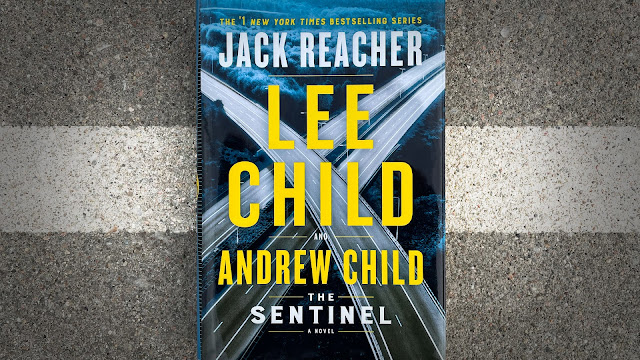
Book Review: Tech at the Center of “The Sentinel” By Lee Child and Andrew Child


“I’ve been in trouble before. I survived. And right now I have bigger fish to fry.” — Jack Reacher in "The Sentinel"

In early 2020, author Lee Child (née James Grant) announced that his brother (author Andrew Grant) was going to take over writing duties for the Jack Reacher series. 

I recall having mixed emotions at the time. I talked about the change in my review of Child’s 24th Reacher novel “Blue Moon.” Child mentioned that he and his brother would collaborate on the next few books together — before Andrew took charge of the series. Due to the fact that I was pretty underwhelmed by “Blue Moon,” I was worried that perhaps the pair was already collaborating. 

I just finished reading the first novel in this new arrangement, titled “The Sentinel.” Andrew Grant — an established author in his own right — is now credited on the cover under pen name “Andrew Child.” 

I’ve previously reviewed eight Reacher novels on this blog (as well as the short story collection “No Middle Name”). For some reason, I put off starting “The Sentinel” for more than a year after its initial publication. 

I think I was worried about the transition to a new writer (even if that writer came from the same gene pool as Lee Child). I know there have been various series over the years that have seen writer transitions such as this (some more successful than others), but there is such a distinctive personality to a Jack Reacher novel — in terms of characterization, story structure, and writing style — that I was worried I’d be disappointed. 

Let me say first off that “The Sentinel” is a far stronger entry in the Reacher lexicon than 2019’s “Blue Moon.” It has a vibe that feels authentic in the Reacher universe. 

This time out, Reacher finds himself in the small town of Pleasantville, Tennessee, after successfully guiding an insurance negotiator (who was driving around lost in Nashville) to an I-40 onramp. 

At first, I thought naming a sleepy little Tennessee burg “Pleasantville” was an uninspired choice (considering the fact that it is the same name as a 1998 movie starring Tobey Maguire and Reese Witherspoon), but it turns out there is actually an unincorporated community in Tennessee called Pleasantville. 

(While I thought naming a pair of fictional towns “Hope” and “Despair” in the novel “Nothing to Lose” was a tad bit hokey, at least it felt more original than “Pleasantville.” But I digress... )

The unassuming Reacher soon finds himself embroiled in a mystery shortly after his arrival at a Pleasantville coffee shop (a situation that is de rigueur for the former military police officer). 

Reacher stumbles upon a man departing the coffee shop named Rusty Rutherford — a local IT specialist. 

Reacher pays the man no mind, but soon “a signal from some ancient warning system in the back of his brain” causes his interest to ratchet up. 

His keen intellect detects a coordinated attack unfolding to snatch Rutherford (involving two men and a woman). Reacher’s MO is to help the unwary stranger.  

In mere moments, Reacher finds himself running afoul of those attempting to ambush Rutherford as well as the local constabulary. All parties seem anxious to shoo Reacher out of town. 

But our hero is persistent. 

Reacher learns that Pleasantville has been hit by a ransomware attack, and Rutherford (the town’s recently terminated IT manager) is being blamed. 

Despite Rutherford’s urging, government officials failed to invest in a more robust IT infrastructure, making the town a “soft target” for hackers and bad actors. Instead of using Rutherford to help solve the attack, the town has turned him into a local pariah — despite his intricate knowledge about such security breaches. 

All of this sets into motion a mystery wrapped in a conspiracy that has its tentacles winding beyond the boundaries of Pleasantville.

In the middle of the storm is our luddite knight errant, Jack Reacher. 

In a two-part interview with The Crew Reviews about “The Sentinel” (watch Part 1 and Part 2), Lee Child hinted that he was handing writing duties over to his younger brother because he wasn’t equipped to keep Reacher fresh for a younger audience. 

You can definitely see attempts to try and infuse more of today’s technology into “The Sentinel” — we even see Reacher nudged into using a cell phone. I don’t know for sure if Lee and Andrew intentionally went with a more “tech-heavy” focus to appeal a more “tech-savvy” audience or not, but it made me wonder. 

For the most part, the tech-based plot worked. There were some instances (such as a few too many successful attempts at cracking 4-digit security codes) that pushed the boundaries of “willful suspension of disbelief.” 

It is a trait that is fairly common with modern thrillers, so it is a minor quibble. 

To be honest, I prefer my Reacher novels to be less tech heavy. That’s the joy of this series. And I’m speaking as someone who has spent a significant portion of his adult life building websites and crafting promotional efforts online. 

I feel that technology has become something of a crutch when it comes to storytelling these days (and in many entertainment properties, computers have turned into “deus ex machina” plot devices that make detective work far too easy). 

One interesting note: In the earliest passages of “The Sentinel,” we find Reacher aiding a Nashville-based band that has been cheated after a gig by bar owner named Derek Lockhart. 

It almost seemed as if that was going to be the circumstance Andrew Child used to set the story in motion (I could have seen a scenario where Reacher unearthed some sort of conspiracy involving an organized crime ring helmed by Lockhart... or something of that nature). It ultimately turned out to be unrelated to the rest of the novel... 

I had a good time reading “The Sentinel.” While it might not rank among my favorite Reacher novels, it was a fun read that felt at home with the rest of the series. I’ll be interested to see how Reacher evolves as Andrew Grant’s influence is reflected in upcoming stories. 

Overall, I am happy the series is continuing and I think things are in capable hands. 

In other Jack Reacher news...

The new Amazon Prime Video series “Reacher” is set to drop on the streaming service Feb. 4, 2022. The first season runs eight episodes and is based on Child’s first novel “The Killing Floor.” 

I’m looking forward to the show and think actor Alan Ritchson embodies the Reacher look. It will be interesting to see if the overall execution of the show itself is as solid as Amazon’s other book-based detective series “Bosch” (read my 2018 post “You Should Be Watching Amazon’s ‘Bosch’”). 

>> If you enjoyed my review of “The Sentinel” by Lee Child, follow me on X/Twitter: @TheJonCrunch 

Here is the teaser trailer for “Reacher”: 


Additional blog posts on author Lee Child:


Monday, December 27, 2021

Book Review: Longmire Unearths Skeletons and Murder in "Dry Bones"


The least populated county in the least populated state...

The last time I checked in with the fine folks of Aksaroka County was my review of Craig Johnson’s tenth novel “Any Other Name”.  

The fictional Wyoming county is the backdrop for one of today’s finest detective series. “Longmire” might be best known to my readers as a Netflix original series (which had its start on the A&E Network). 

But the bestselling book series is a rich universe unto itself. 

I follow and interact with a number of mystery/thriller aficionados (and aspiring writers) on social media, but I don’t see enough attention given to Johnson’s series. 

Maybe it’s because the author eschews visceral thrills and modern trappings to craft his mystery series, creating a timeless quality to the stories. A Longmire novel — with a few minor tweaks — could feel at home anytime from the 1960s to today.

“Dry Bones” is the eleventh full-length novel in the series. 

The story starts off with “one of the greatest paleontological discoveries in modern times” as well as snapping turtles in a pond nipping at the body of rancher Danny Lone Elk.

In the hands of another author, this peculiar combination might not work, but Johnson deftly weaves these “tall tale” elements into an intriguing narrative. 

“Dry Bones” is centered around the discovery of the most complete Tyrannosaurus rex skeleton ever found. 

The T-rex is affectionately referred to as Jen (named for the woman who discovered the skeleton’s two-fingered talon). The find appears to be a potential financial windfall for the High Plains Dinosaur Museum.

The only problem is that the dinosaur bones are on the property of the aforementioned Danny Lone Elk. Officials from the state government and the Federal Bureau of Investigation descend on Absaroka County as a result of the dino bones. 

What ensues could be dubbed “Raiders of the Lost Dinosaur” as the assembled forces jockey for position. 

In the eye of the storm is Sheriff Walt Longmire, the venerable western lawman at the heart of Johnson’s novels. 

A Longmire novel is told from Walt’s first person point of view. The conversational tone adds a cozy feeling of familiarity to the mysteries. 

Along for the ride is a supporting cast that includes recurring characters like Longmire’s undersheriff Victoria “Vic” Moretti, outdoor adventurer Omar Rhoades, former sheriff Lucian Connally, Walt’s daughter Cady, and longtime friend Henry Standing Bear. 

While each novel works as a standalone, there are various subplots that carry over from book to book. In many cases, these points deal with Walt’s life beyond the world of law enforcement. 

Those of you who watched the TV series have a general familiarity with the key players in the Longmire universe, but — as is the case with filmed adaptations — the series strays from the novels. 

For example, in the novels, Cady Longmire lives in Philadelphia with her husband Michael Moretti (Vic’s brother) and their five-month-old daughter Lola (the third Longmire novel “Kindness Goes Unpunished” takes place in Philly and ranks as one of my favorites in the series — it was great to see Walt and Henry Standing Bear mosey outside of their western confines). 

Mother and daughter are flying to Wyoming for a visit during the early passages of “Dry Bones.” What looks like a routine visit turns into a situation that is anything but routine. 

I won’t go into spoilers, but the subplot further develops the relationship between Walt and Cady. One of the things I like about Johnson’s mysteries is that the stories pack an emotional punch. 

This passage illustrates Walt’s emotional turmoil during these sequences: 

“I kept thinking about much easier this would have all been if my wife were still here, and how I would’ve gladly traded places with her if only she could be here to console Cady and care for the baby. Martha was like that — she didn’t have to say anything but would simply lay her hand on you and suddenly things were all right.” 

It is this aspect that makes a Longmire novel so compelling. Some authors might be tempted to create a tough western lawman who is merely a vessel for solving a mystery. But Johnson isn’t afraid to add in psychological heft and a sense of native spirituality to the character. 

I’ve mentioned in my other blog posts (including my review of the previous novel “Any Other Name”) that Bridget and I have had the opportunity to interact with Craig Johnson (and have him sign some books) on three occasions at one of Omaha’s best independent bookstores, The Bookworm


If you get a chance to attend an in-person event with Johnson, I’d highly recommend it. He typically does a reading at his events, and the tales come to life as the author’s distinctive baritone voice belts out a passage from his latest tome. 

On the whole, I had a good time reading “Dry Bones.” 

Writing this review makes me wish I had had my blog when I started reading the series in 2012. I really enjoy documenting my progress with these reviews, and look forward to bringing you my thoughts on the next entry in the Longmire series! 

>> If you enjoyed my review of “Dry Bones” by Craig Johnson, follow me on X/Twitter: @TheJonCrunch 

Related blog posts on author Craig Johnson and “Longmire”: 


Sunday, December 26, 2021

Triple Holiday Review: "A Castle For Christmas," "The Princess Switch 3," and "Candy Coated Christmas"


I was just recalling a trip we made back in December of 2016 to St. Cloud, Minnesota. We were following the University of Nebraska at Omaha Hockey team there as they took on the St. Cloud State Huskies in a two-game conference matchup. 

(Don't worry... I'll get to the sappy Christmas movies in a moment.) 

It was cold and snowy during our visit (the trip home had us driving through a blizzard). 

The one thing I remember about that journey — more than anything else — was the fact that we decided to forgo a number of possible activities (during non-game hours) to stay in our cozy hotel room and warm our hearts with the endless marathon of holiday movies on the Hallmark Channel. 

I want to qualify this by saying that we don't have cable, satellite, or a cable-like streaming bundle available to consumers (and haven't for many years). So this was our chance to enjoy all the schmaltzy goodness Hallmark has to offer each December. 

(One note: On our next visit to St. Cloud in 2018, the hotel had removed the Hallmark Channel. Coincidence? Or was it a strategic attempt by the local Chamber of Commerce to get lodgers out and spending money?)

It seems like everyone is copying the formula that has worked so well for the Hallmark Channel (and other linear TV outlets like Lifetime that are known for this sort of fare). I've reviewed a number of holiday movies made by Netflix (some produced by Hallmark partner MPCA) on this blog, but more are getting into the game. 

In this "triple-feature review," I have three syrupy holiday movies to look at: "A Castle For Christmas" (Netflix), "The Princess Switch 3: Romancing The Star" (Netflix), and "A Candy Coated Christmas" (Discovery+). 


"A Castle For Christmas" 

"A Castle For Christmas" features 1980s icon Brooke Shields as a bestselling novelist named Sophie Brown — and Brown has just killed off a popular character in her book series. 

Facing public backlash, Sophie decides to travel to a village in Scotland (home of her ancestral roots) and in rather short order sets her sites on purchasing a castle (where her father once served as a groundskeeper) from owner Myles (played by an overdone Cary Elwes), who is dealing with troubles of his own. 

If this wasn't a sugary Christmas movie, you'd have to question the mental well-being of Ms. Brown. She's potentially thwarted her literary career by killing off a popular character, and she has made a sketchy financial deal for a dilapidated castle. 

All of this is wrapped up with Sophie's recent divorce from her husband. In a more serious drama, we might be looking at the story of a successful person unraveling. 

But there is nothing in the world of schmaltzy Christmas movies that can't be fixed by eggnog, a loyal dog, Christmas lights, and a knitting circle that meets at a local pub. 

Keen-eyed followers of the "Netflix Christmas Universe" will spot a brief cameo from a couple of supporting players seen in "The Princess Switch" movies. 

Overall, the movie hit all the key notes typical for this territory. I just never bought the idea that there was any sort of chemistry between Shields and Elwes.  


"The Princess Switch 3: Romancing The Star" 

I love "The Princess Switch" movies. In fact, I did a double review of the first two movies last year. 

It's another year, and the team behind "The Princess Switch" is as prolific as ever dishing out Vanessa Hudgens's doppelgängers. 

That result is "The Princess Switch 3: Romancing The Star," at it offers fans a chance to catch up on the exploits of baker-turned-princess Stacy DeNovo (Vanessa Hudgens), Queen Margaret Delacourt (Vanessa Hudgens), and Margaret's cousin Lady Fiona Pembroke (Vanessa Hudgens). 

Honestly, I was a tad bit disappointed they didn't come up with a fourth doppelgänger (just to keep Hudgens on her toes). 

In this entry, Lady Fiona really takes center stage. 

As Princess Stacy and Queen Margaret are prepping to host an international Christmas festival in Montenero, the centerpiece decoration — known as the "Star of Peace" (a tree-topper on loan from the Vatican) — is stolen. 

Stacy and Margaret call on Fiona (who is serving a "sentence" working at an orphanage due to her exploits in "The Princess Switch: Switched Again") to help steal it back. 

The typical "Princess Switch" hijinks ensue. We get sets overloaded with Christmas decorations, the three doppelgängers posing as one another, cheesy dialogue, and a love interest for Fiona — ex-boyfriend Peter Maxwell (Remy Hii). 

What I like about "The Princess Switch" movies is that they've veered beyond the standard schmaltzy romance stories into something far more fun and ridiculous (in the case of the most recent entry, a frosting-covered heist movie). 

As a result, I've really enjoyed the evolution of "The Princess Switch" series, and can't wait to see what craziness ensues next. 


"Candy Coated Christmas" 

Shifting away from Netflix, I decided to include my thoughts on the new Food Network/Discovery+ production titled "Candy Coated Christmas." 

Molly Gallant ("Last Man Standing's" Molly McCook) lives in Beverly Hills, and is a marketing specialist for her family's resort hotel chain. She is counting on seed money from her father for a baby products business she is planning to start with her friend Gracie (Jae Suh Park). 

She is also preparing to jet to Hawaii for Christmas. 

"Candy Coated Christmas" is a Hallmark-esque holiday movie. That means the best-laid plans for our successful, independent business woman have to go awry in some manner — only to be saved by a rough-around-the-edges hunk in a charming little burg. 

In Molly's case, she learns her family's business is failing (due to a lack of bookings) and the only way she can get the money for her startup is to sell her mother's childhood home in the town of Peppermint Hollow, Washington. 

Most people in Molly's situation would handle the sale via phone, text, and email. But — this being a schmaltzy Christmas movie — Molly has to fly to Peppermint Hollow to put things in motion.

We all know how this is going to go. She's flying to the flipping "Peppermint Capital of the World" for Pete's sake!!

The house is being rented by the Winters family (old family friends of her deceased mother).

Kim (Lee Garlington), her son Noah (Aaron O'Connell), and Dakota (Landry Townsend playing Kim's teen granddaughter and Noah's niece) are the tenants. They grow peppermint. They make things out of peppermint — including Kim's special formulation that soothes infants with just a few drops on a pacifier. 

We all know how this is going to go down.  

Molly is going to fall in love with the Winters family. In particular, she is going to fall in love with Noah — a kind, gentle, perfectly hunky man who looks like he stepped out of a Land's End catalog, but just so happens to be a genius MIT grad. 

Ree Drummond of "The Pioneer Woman" plays local Peppermint Hollow baker Bee Tyler Essary (who dispenses delicious treats and sage business expertise). 

I think "Candy Coated Christmas" could have benefitted from a bit more character/story development (yes, I know that sounds like a ridiculous comment). But I enjoyed it. Maybe Discovery+ will check in on things in Peppermint Hollow again next year. 

************

More than anything, I enjoyed listening to Bridget throw snowballs at the Santa-sized plot holes featured in each of these movies. It is sort of fun to just sit back and immerse yourself in the goofiness of it all — and scratch your head at all the leaps in logic that take place. 

"A Castle For Christmas," "The Princess Switch 3," and "Candy Coated Christmas" will never be mistaken for high art. But the characters are endearing — and the outcomes are so sweet and sentimental — that you just wish your life was tied up neatly with that sort of sparkly bow. 

Let's face it, we could all use more of that!